

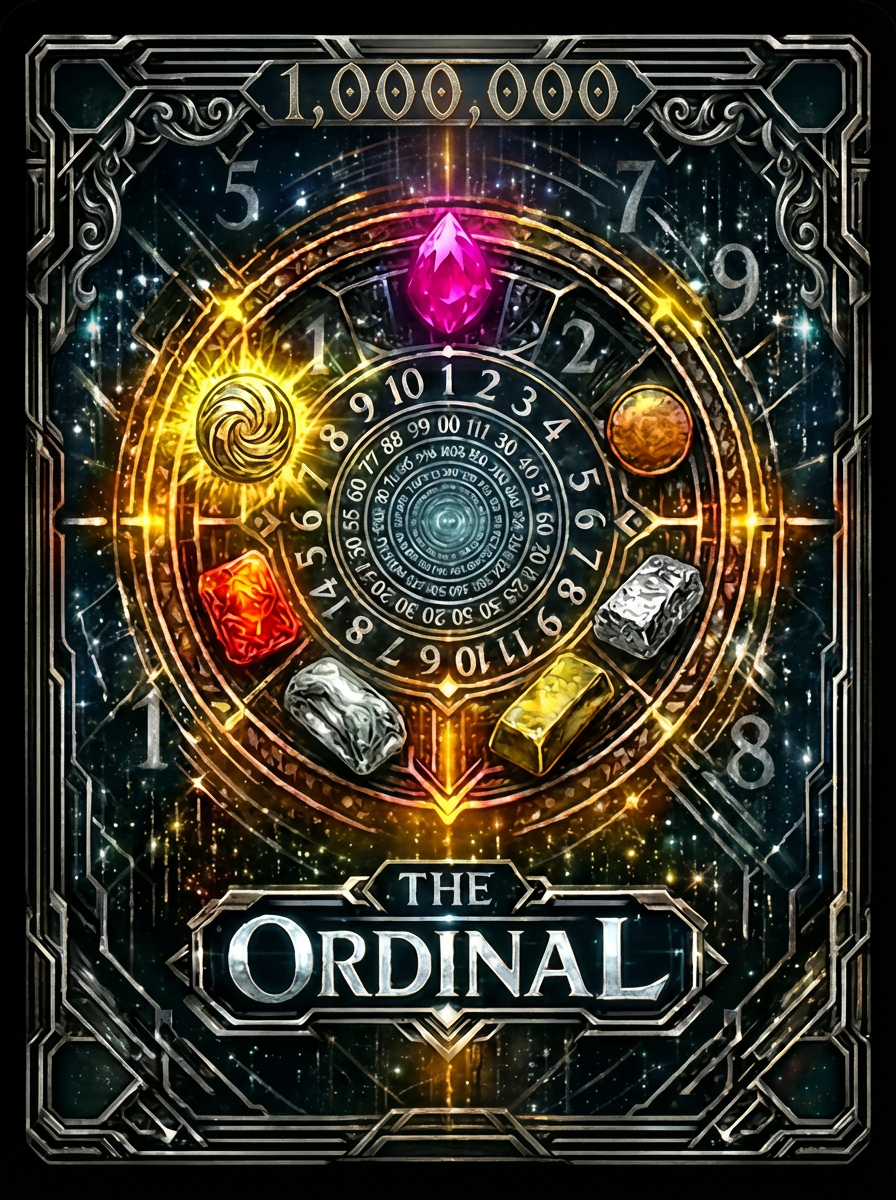
okay so someone forwarded me this message. it was something like "my sister's brother's mom's best friend's uncle said this looks like a scam." and i genuinely could not stop laughing. that's like six degrees of separation from an opinion.
but it's a fair point and i want to address it seriously because i think there are two completely different things people mean when they say "scam," and they require two completely different answers.
scam type 1: "you're giving money to a random internet person in return for what could be nothing."
yes. technically. you are handing a dollar to a stranger on the internet. in return you get a numbered digital card that lives in a database. is that "nothing"? i don't know. maybe. but here's the thing -- it's a dollar. it's genuinely just a dollar. and the question i keep coming back to is: what if it becomes something?
the million dollar homepage sold pixels. literal single pixels on a webpage for $1 each. people thought that was pointless. those people were wrong, or at least, the pixels are still there, the story is still told, and the guy made a million dollars. i'm not saying we're going to be that. i'm saying the early internet had a habit of turning "this is stupid" into "this is history."
the worst case is you spent a dollar and got a card you don't care about. that's the floor. the ceiling is unknowable.
scam type 2: "my data is going to the DARK WEB."
i want to be clear: i do not know where the dark web is. we have never been there. we have no plans to go there.
more practically: your credit card info never touches our servers. it goes straight to stripe. we get a notification that says "payment confirmed." that's it. your email goes in our database and is used for exactly one thing: sending you a magic link so you can log in and see your card. it is not sold. it is not shared. it is not used to market anything to you. ever.
we wrote an actual Privacy Policy and Terms & Conditions. boring documents. but they exist and they say the same thing i just said.
anyway. please tell your sister's brother's mom's best friend's uncle that we're probably fine.
So. We did it. The site is live.
The idea started as a joke. What if you built something like the Million Dollar Homepage but instead of pixels you sold numbers? Every number from 1 to 999,999 gets turned into a unique digital card. You pay $1. You get the next number in line. That's it. No tricks.
We called each card "The Ordinal." As in, it's a number. Your number. Specifically yours, permanently, in the order you claimed it.
The thing that makes it interesting is the rarity system. The tier of your card isn't random. It's determined entirely by math. Prime numbers, palindromes, Fibonacci sequences, historically significant dates encoded in the number, repeating digits, sequential straights. If a number has a mathematical property that makes it interesting, your card reflects that. If it doesn't, you get Copper, and that's fine. Most of life is Copper.
We built seven tiers: Copper, Silver, Gold, Platinum, Orichalcum, Electrum, and Aetherium. The rarest cards in the entire collection are specific numbers we hardcoded ourselves. Some are mathematically perfect. Some are just deeply weird numbers that deserve a special card.
Will a million people buy in? Genuinely no idea. But the experiment is running. And whoever gets card #1 just became part of something. Whether that something matters is up to all of us.
It's 2am and I just want to explain the rarity system because I keep seeing people confused.
Your card's tier is not random. It never was. It's a pure function of your number. We run the number through a deterministic set of checks every time your card loads, and the result is always the same. Same number, same tier, forever.
The checks, roughly in order of rarity:
Aetherium: Hardcoded special numbers. The primes of primes. Mathematically perfect numbers. Numbers so weird they earned it manually. There are fewer than a hundred of these in the entire collection.
Electrum: Six-of-a-kind digits (111111, 888888). Repeating straights (123456, 654321). These are vanishingly rare by accident.
Orichalcum: Five-of-a-kind. Fibonacci numbers. Munchausen numbers (numbers where each digit raised to itself sums back to the original number). Numbers with genuinely strange properties.
Platinum: Palindromes. Numbers that read the same forwards and backwards. More common than you'd think.
Gold: Valid calendar dates encoded in the number. 120199 reads as December 1, 1999. Any real date earns Gold minimum.
Silver: Prime numbers. There are 78,498 primes below 1,000,000. Silver tier is not small.
Copper: Everything else. Most of life is Copper.
Someone asked if this is gambling. It's not, and here's why in plain language.
Gambling requires three things: consideration (you pay), chance (the outcome is random), and a prize (you might get something valuable back). We have consideration. We don't have chance. The outcome is not random. You know, before you buy, that you will receive a sequentially numbered digital card with a deterministic tier based entirely on math. There is no prize to win. You are purchasing a specific thing.
The question people are really asking is: "could I get unlucky?" And the answer is: the system doesn't work that way. Card number 777777 is always, irreversibly, a very special card. Card number 500001 is Copper. You don't know which number you'll get until you pay, but you know the system is fair and the rules never change.
It's closer to buying a scratch-off lottery ticket where the prize structure is fully published in advance and verified by math, not a lottery company's word. Except there's no "winner" in the traditional sense. There's just your number, and it's yours.
I keep getting asked: "but what IS it?" And that's a fair question.
A digital collectible is a scarce, unique digital asset. The scarcity is enforced by the system, not just claimed. Our cards are scarce because there are exactly 999,999 of them, numbered 1 through 1,000,000 (minus one particular number we don't issue), and each number can only ever be owned once. It cannot be reissued. If you own card #8675, no one else ever will.
That's the whole thing, really. Most digital things are infinitely copyable. Your card is not. Your number is yours. The image is generated on demand from your number's properties. The generation logic is deterministic and documented. Your card looks the way it looks because of who your number is.
Is it "worth" anything? That's up to the market and the community. The Million Dollar Homepage pixels were worth $1 each and then the internet decided some of them were cultural artifacts. We think numbers have at least that much potential. Some numbers are deeply interesting. 142857 is cyclic. 1729 is the Hardy-Ramanujan number. 40585 is a Munchausen number. These numbers would be special whether we made cards of them or not.
$1 was chosen very deliberately and I want to explain why.
It had to be low enough that anyone could participate. The experiment only works if the barrier to entry is effectively zero. $1 is less than a coffee. It's less than a download. It's an impulse. We wanted the decision to be "do I want to own a numbered thing?" and not "can I afford to own a numbered thing?"
It also had to be real money. Free doesn't work for this. If cards were free, the number itself carries no weight. Paying $1 is a commitment. It's small enough to be comfortable and large enough to be meaningful. You didn't get your number by accident. You chose to get it.
And finally: $1 is a fair price for what you're getting. You're getting a permanent, unique, mathematically-derived digital artifact. We think that's worth a dollar. We hope the community decides it's worth more than that. But a dollar is what it costs to enter.
In 2005, a student named Alex Tew from England sold pixels on a website for $1 each. One million pixels. One million dollars. The whole page sold out. He paid for his university degree. The internet loved it.
We have thought about that page a lot.
The thing the Million Dollar Homepage figured out was that novelty has value. The pixels themselves weren't worth anything. The idea of owning a pixel on a page that millions of people visited was worth something. The story was worth something.
We're doing something related but different. Our cards aren't advertising space. They're numbered. The number is what matters, not the location. Card #1 isn't special because it's in a good spot. It's special because it's first. Card #142857 is special because of what that number actually is. Card #999999 is special because of what it represents.
We are openly stealing from Alex Tew's idea that a website can be a social artifact. We think he'd approve.
People keep asking this and I want to give an honest answer.
The card image is generated server-side from the number's properties. Those properties are deterministic and documented. The tier, category, and description of your card are based on mathematical facts about your number. Those facts don't go away if we do.
If the site ever shut down, you would still know your number. You could regenerate your card's description from the documented rules. The number's mathematical properties don't require our servers.
We also intend to be around for a long time. The cost to run this site is low. There's no VC money to pay back. There's no growth target. We built something we find genuinely interesting and we want to see how far it goes. That's the whole plan.
But yes, we've thought about it. And we think the answer is: your number is yours. The internet remembers.